ADHD Task Initiation and How to fix it [2026]

![ADHD Task Initiation and How to fix it [2026]](https://blog.saner.ai/content/images/2026/08/generated_image--85-.webp)
ADHD task initiation: 4 sigsn, 8 strategies, and 1 app to start your work
Have you ever felt like you could conquer the world, if only you could get started on that project or homework assignment?
If you have ADHD, you might find kicking off tasks a bit like trying to start a campfire with wet wood—it can take a lot of effort!
Today, we're diving into the world of task initiation, which is just a fancy way of saying "getting started on stuff." So, let's break it down and discover some cool ways to boost your start-up skills!
What is task initiation in ADHD?

ADHD task initiation is the ability to start a project, chore, or assignment without external pressure, driven by a deficit in executive dysfunction and dopamine regulation. Brains with ADHD do not release baseline dopamine efficiently, making low-dopamine tasks—like doing dishes or writing reports—feel physically painful to begin. Because dopamine acts as the neurological fuel for starting actions, relying on sheer willpower fails to trigger momentum.
Why Your ADHD Brain Struggles to Start Tasks

In ADHD, this executive function is specifically impaired due to neurobiological differences — not lack of willpower or motivation.
1. The dopamine gap
The most cited finding in ADHD neuroscience comes from a landmark PET imaging study by Volkow et al. (2009), published in JAMA. Researchers found measurably lower dopamine activity in the nucleus accumbens, midbrain, and caudate of adults with ADHD — precisely the brain regions that drive "starting" behavior.
2. The interest-based nervous system
Previous research shows that ADHD brains operate on an interest-based nervous system: tasks must be novel, interesting, challenging, or carry immediate urgency to generate sufficient dopamine for activation.
This is why you can hyperfocus for three hours on something that excites you, then be completely unable to send a two-line email.
3. The prefrontal cortex connection
The prefrontal cortex governs executive function — the higher-order cognitive system responsible for planning, impulse control, and working memory.
A 2023 study in Frontiers in Neuroscience using functional near-infrared spectroscopy confirmed reduced activation in the dorsolateral prefrontal cortex during executive function tasks in ADHD participants compared to controls
This is not procrastination. They look the same from the outside. They are not the same thing.
5 signs your ADHD is blocking task initiation
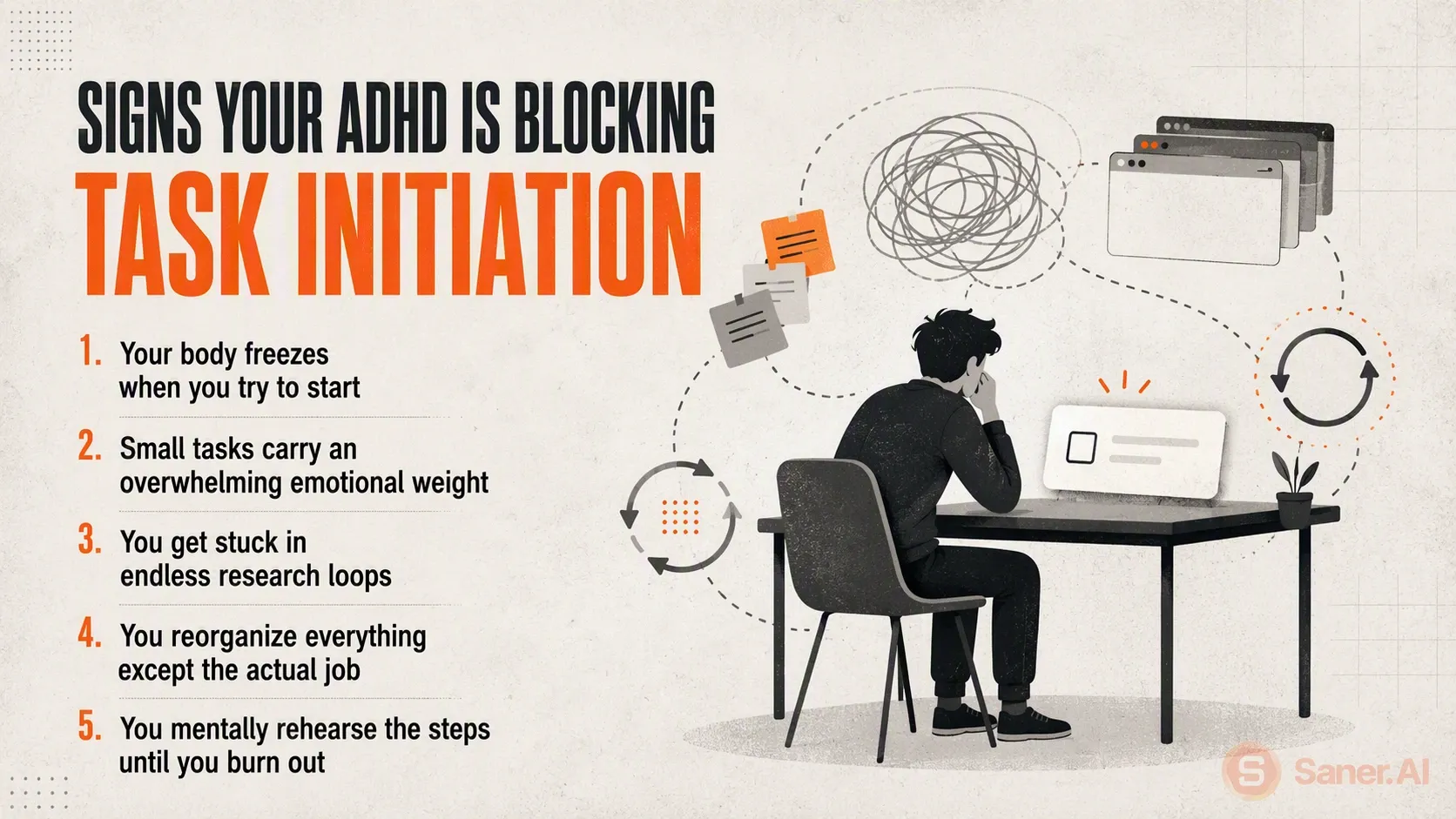
Your body freezes when you try to start
You sit down at your desk with full intention to work, but your hands physically won't move to open the document. You end up staring at a blank screen or your shoes for ten minutes, feeling completely locked in place. It feels less like laziness and more like a circuit breaker tripped in your brain.
Small tasks carry an overwhelming emotional weight
Opening an unread email or starting a simple chore suddenly triggers a surge of anxiety or dread. You aren't just putting off the work; you are actively trying to avoid the heavy discomfort attached to hitting "reply." The task itself takes thirty seconds, but the mental barrier feels enormous.
You get stuck in endless research loops
Instead of writing the first paragraph or making the call, you spend two hours researching every possible approach. Gathering information gives you a fake sense of progress while keeping you safe from actually beginning. You convince yourself you need just one more tab open before you can start.
You reorganize everything except the actual job
Your brain decides that before you can calculate a simple spreadsheet, your entire physical workspace needs a complete overhaul. You clean your desk, color-coordinate your pens, and reorganize your computer desktop. By the time you finish setting up, your brain is completely exhausted.
You mentally rehearse the steps until you burn out
You spend all your energy running through the entire process in your head over and over. You think about how hard step four will be, how long step seven will take, and what could go wrong at the end. By the time you finish overthinking, you have no energy left to do step one.
8 strategies to overcome ADHD task initiation
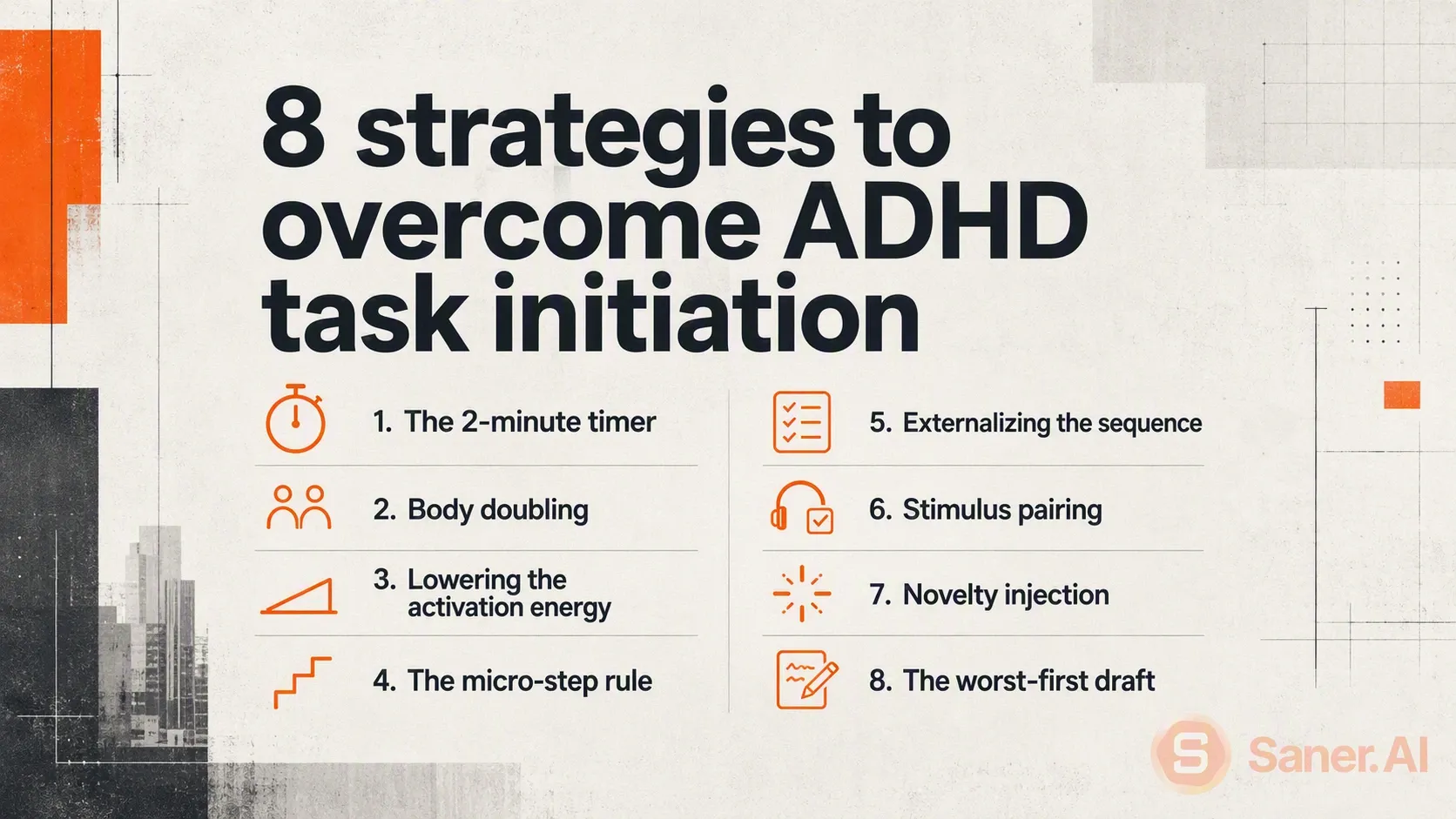
1. The 2-minute timer
ADHD brains process dopamine differently, which makes starting a task feel like climbing a mountain.
Setting a timer for two minutes bypasses the executive dysfunction barrier because your brain recognizes that two minutes of effort isn't a massive threat. Pick one task, set a timer on your phone for 120 seconds, and give yourself full permission to stop when the alarm goes off.
If you are sweeping the kitchen floor and the timer rings, drop the broom and walk away if you want to. More often than not, simply breaking the friction of starting is enough to keep you going.
2. Body doubling
Working in isolation lets your brain wander into side quests. Having another person physically or virtually present creates a subtle form of social accountability that grounds your focus.
You do not need them to help you with your work or even talk to you. Knowing someone else is in the room makes it significantly harder to abandon the task before you begin.
3. Lowering the activation energy
When a task feels too big, the physical setup required to start it often becomes a hidden stopping point. Your brain looks at the five small steps needed just to prepare and labels the whole project impossible. You can eliminate that wall by completing the setup phase hours before you actually plan to work.
If you need to write a report at 2:00 PM, open a blank document, write the title, and leave it sitting on your screen at 9:00 AM. When 2:00 PM arrives, the initial friction is gone, and you only have to type the first sentence.
4. The micro-step rule
ADHD executive function struggles with vague, multi-layered goals like "clean the garage." Your brain cannot figure out where to place the first drop of effort, so it freezes.
Strip the task down until the first action feels ridiculously small. Do not aim to clean the garage or even organize a shelf. Tell yourself your only job is to pick up one empty cardboard box and take it to the recycling bin. Once that single action is finished, you have officially started, which breaks the paralysis.
5. Externalizing the sequence
Holding a sequence of steps in your working memory burns through mental energy before you ever start moving. Write down the first three actions on a sticky note and place it directly in your workspace. Staring at a concrete, three-step list removes the need to mentally map out the process, letting you execute without overthinking.
6. Stimulus pairing
Boredom feels physically uncomfortable when you have ADHD, which causes severe resistance to routine tasks. You can make low-dopamine tasks easier to start by pairing them with an immediate high-dopamine input.
Reserve a specific podcast, audiobook, or playlist that you love, and only allow yourself to listen to it while doing that specific task. If you only play your favorite true-crime podcast while folding laundry, your brain stops viewing the chore as a drain and starts viewing it as listening time.
7. Novelty injection
ADHD brains thrive on novelty and get stuck when faced with repetitive or familiar setups. Changing the environment or the tools you use gives your brain a quick hit of interest that can break through initiation block.
8. The worst-first draft
Perfectionism is just task initiation anxiety in disguise. The fear of doing something poorly often stops you from doing it at all. Give yourself explicit permission to make the initial attempt as bad as possible. If you need to write an email to your boss, open a draft and deliberately write messy, incomplete sentences full of typos. Removing the expectation of quality lowers the stakes, making it far easier to put words on the page. You can always fix a bad draft, but you cannot edit a blank page.
How AI can lower the barrier to starting tasks
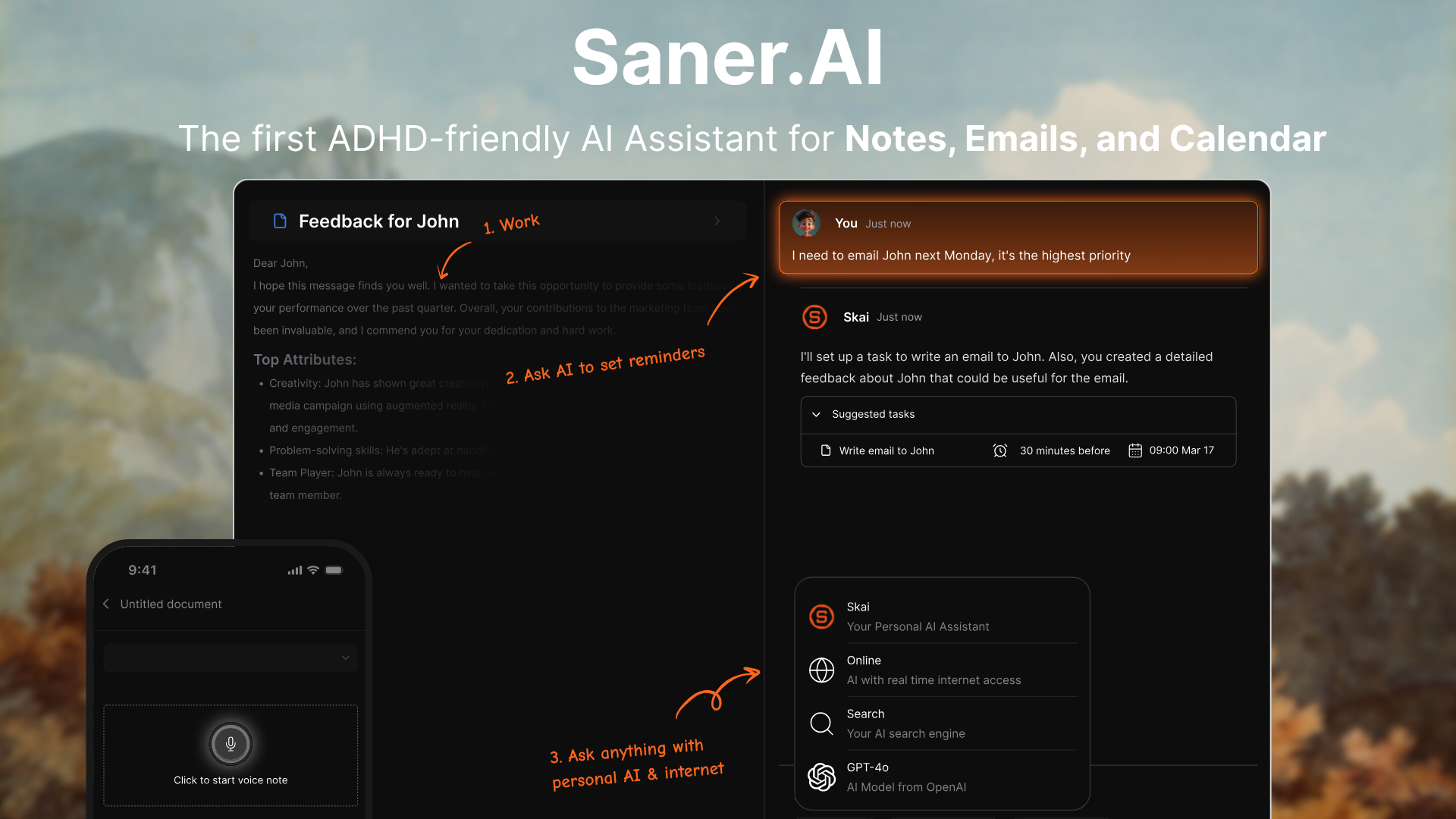
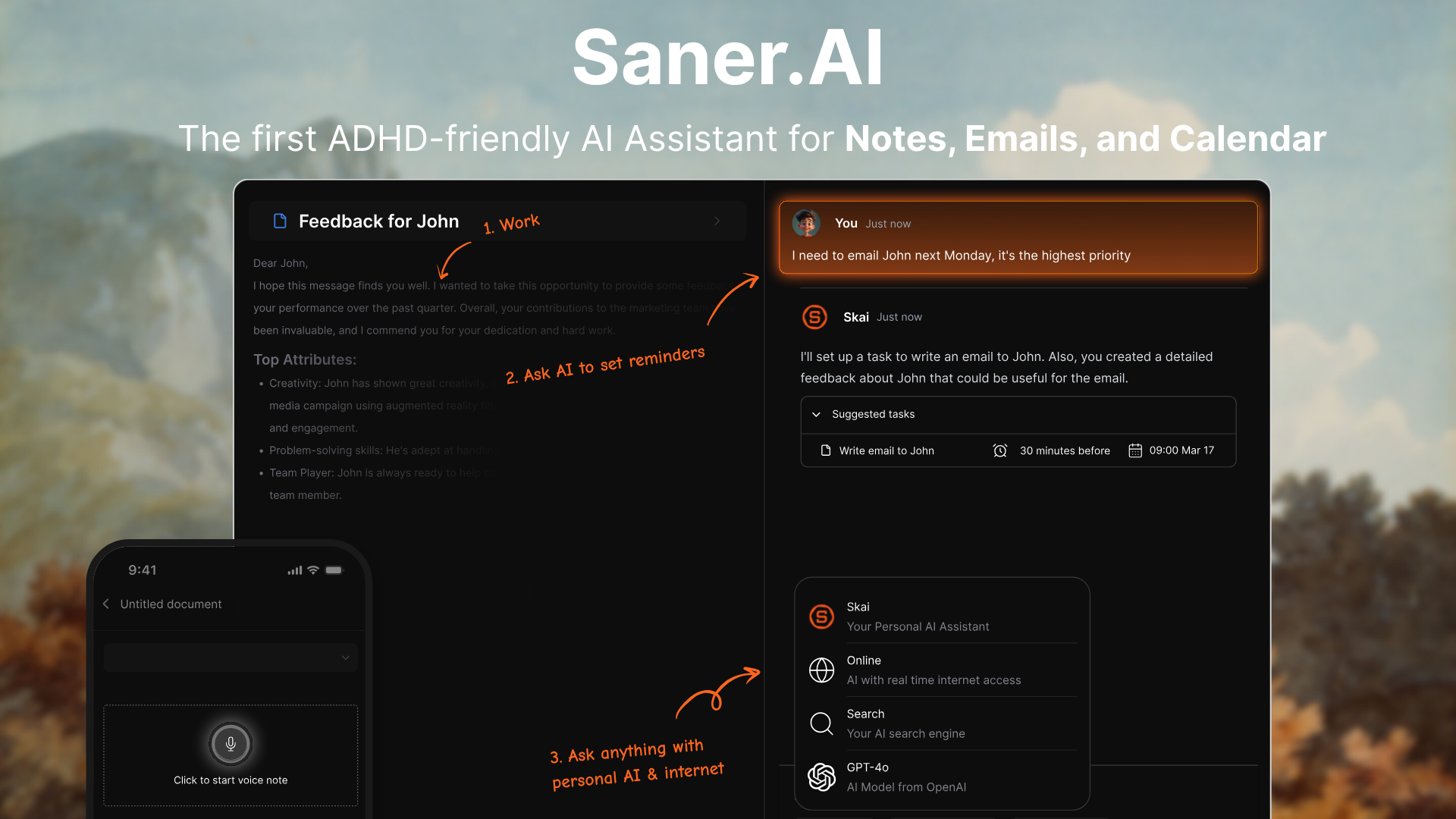
Saner.AI is a personal workspace that combines notes, email, calendars, and to-do lists into a single dashboard designed around ADHD task initiation challenges. The app uses its internal AI assistant, Skai, to convert messy thoughts and raw notes into immediate, small action items.
Key feature
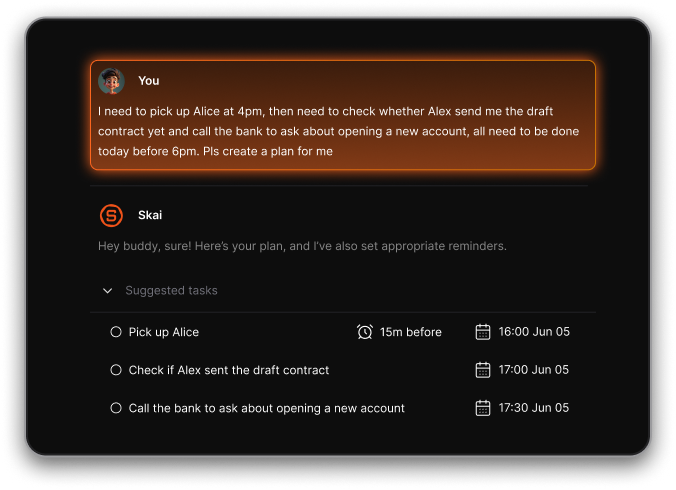
- Brain dump to step-by-step tasks
I tried typing messy, unstructured thoughts into the prompt box, and the system organized them into small, manageable action steps with suggested target dates.
- Proactive daily check-ins
I used the scheduled reminder feature, which sends gentle updates throughout the day to nudge you toward your open tasks without feeling overwhelming.
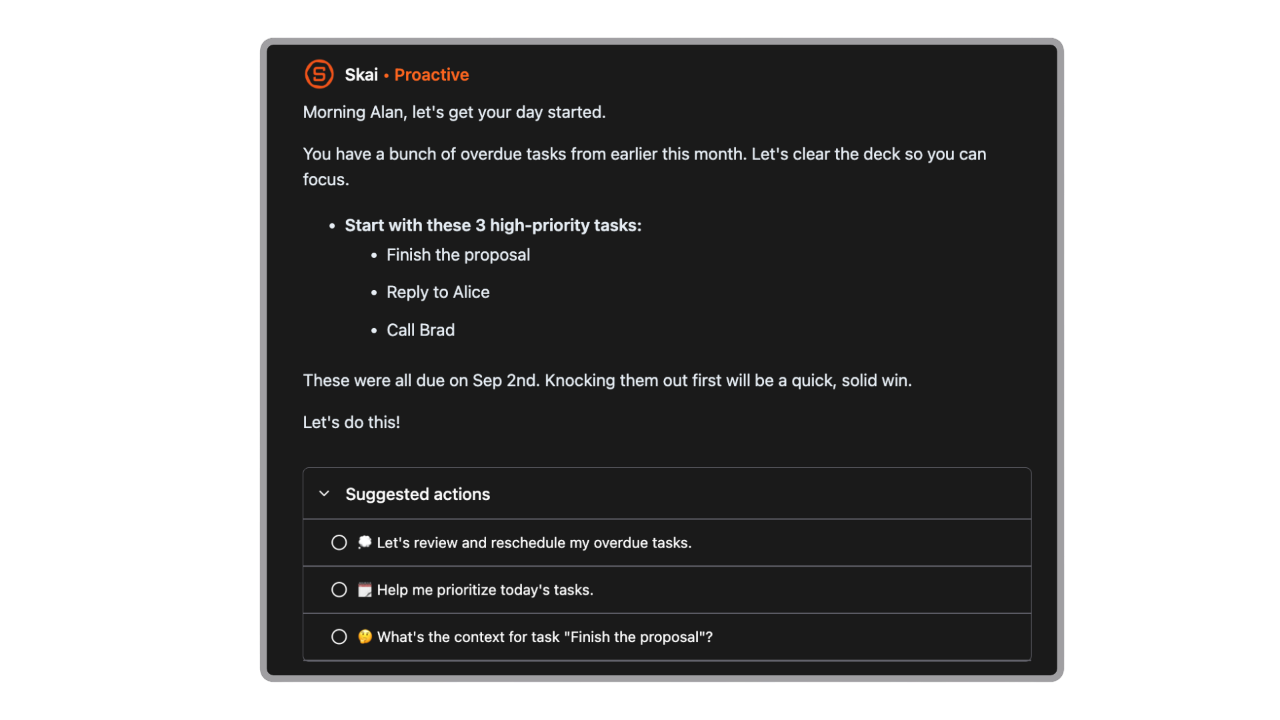
- Automatic note organization
I liked that notes are tagged automatically upon saving, which reduces the manual cleanup required to keep a workspace tidy.
Pros
- I like how quickly I can type out scattered thoughts and get an organized action list without formatting anything manually.
- I appreciate the gentle automated reminders that help me return to my work when I get distracted.
- I feel it helpful that the internal search lets me find old notes using natural questions instead of exact folder paths.
- I enjoy that it combines my calendar, notes, and tasks in one window so I switch tabs less often.
Cons
- I sometimes feel frustrated when uploading larger reference files, as processing speed can drop during peak hours.
Who is it best for
- Saner.AI is best for knowledge workers, freelancers, and students with ADHD who struggle with task initiation, executive dysfunction, or context switching across scattered productivity apps.
Pricing table
| Plan | Price (USD) | Key capabilities |
| Free | $0/mo | Basic semantic search, 30 AI messages per month, 1-minute voice capture limits. |
| Starter | $8/mo (billed annually) or $12/mo | Unlimited voice recording, calendar and email integrations, expanded AI message limits. |
| Standard | $16/mo (billed annually) or $20/mo | Higher context limits, fast AI processing, priority support. |
What people say about Saner.AI
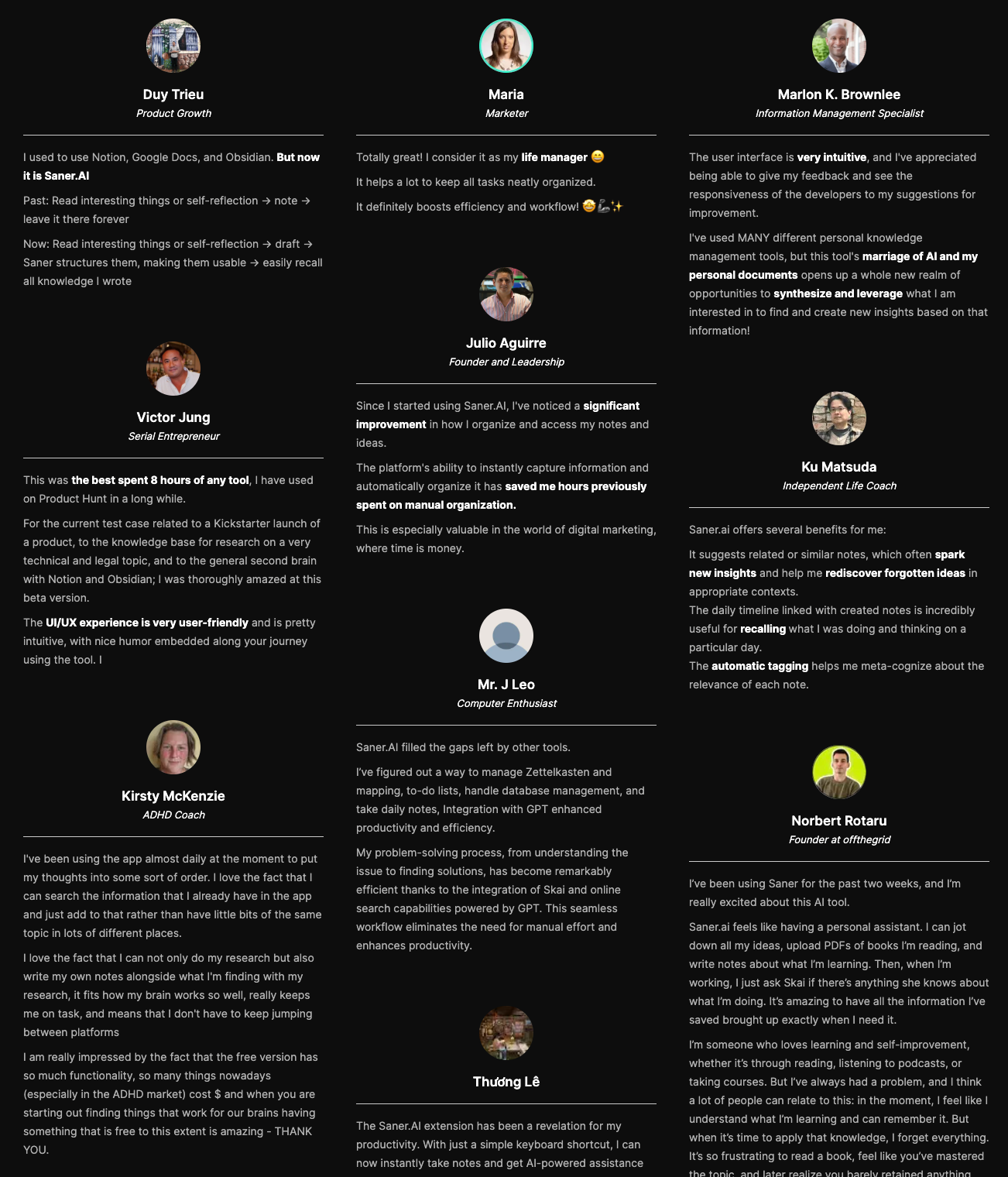
Users highlight the system's ability to act as a personal second brain that helps reduce daily mental clutter.
"The user interface is very intuitive, and I've appreciated being able to give my feedback and see the responsiveness of the developers... this tool's marriage of AI and my personal documents opens up a whole new realm of opportunities..." — Verified Review
How to get started
- Step 1: Open the web app or mobile app and type a quick brain dump of your current tasks into the chat prompt.
- Step 2: Review the automatically generated task list and confirm the suggested schedule dates.
- Step 3: Set up your daily notification window to receive automated task nudges throughout your work day.
V. Conclusion
Starting is the hardest part when your brain refuses to cooperate, but it is a skill you can build over time. You do not need to fix your entire workflow today. You just need one small win to get moving.
If you want to keep exploring what works for your brain, check out our guide on handling time blindness or look through these practical ADHD reminders apps. You can also browse our top picks for the best ADHD productivity apps to see which tools match your routine.
When you need a light way to organize your thoughts without getting overwhelmed, give Saner.AI a try. It keeps your notes and tasks in one simple place so you can start working without the extra friction.
Stay on top of your work and life effortlessly
👉 You may like this post on how to improve Productivity for adults with ADHD
Frequently asked questions
1. Why is starting tasks so hard with ADHD?
ADHD affects executive function, especially the dopamine pathways that trigger action. When a task lacks immediate interest or urgency, your brain struggles to generate the chemicals needed to transition from rest to action. It is a biological friction point, not a lack of willpower or laziness.
2. What is the 5-second rule for ADHD task initiation?
The 5-second rule involves counting down "5-4-3-2-1" and physically moving toward your task as soon as you hit "1." Counting occupies your conscious mind, interrupts overthinking, and creates momentum before your brain has a chance to talk you out of starting.
3. How do you overcome ADHD paralysis when overwhelmed?
Pick one small step and lower the stakes completely. Instead of trying to clean the kitchen, focus on putting a single cup in the sink. Breaking a task down until the friction disappears helps trick your brain into taking that first action, which usually breaks the paralysis.
4. How can Saner.AI help with ADHD task initiation?
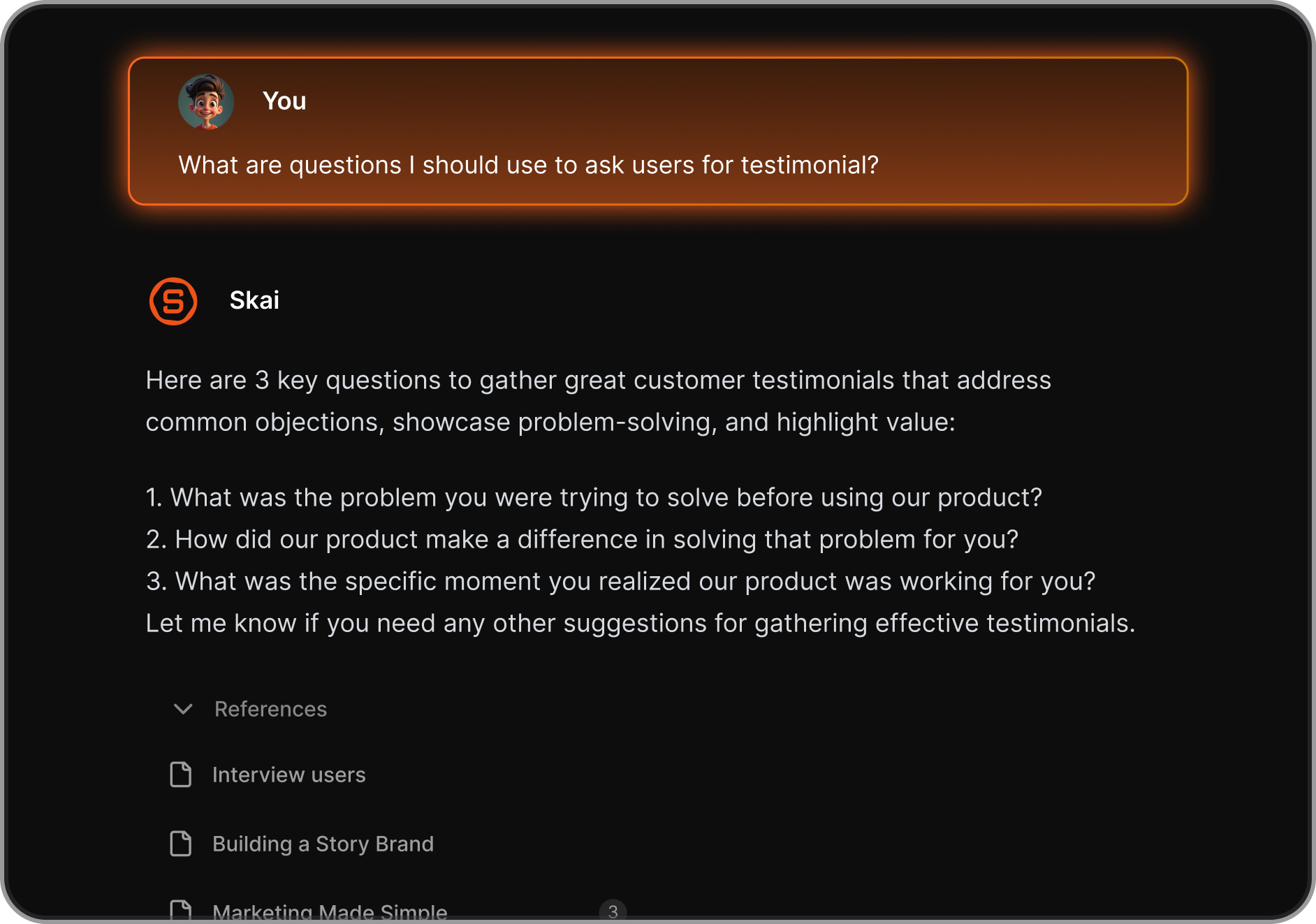
Saner.AI works as a visual, low-effort space to capture thoughts before they turn into overwhelming mental clutter. By letting you drop messy notes and ideas in one place without manual tagging or complex setups, it lowers the friction needed to organize your day and start working.
5. What is the difference between ADHD task initiation and procrastination?
Procrastination is typically a choice to delay something uncomfortable. ADHD task initiation struggles are involuntary executive dysfunction. You might sit for hours wanting to do a task, completely aware of its importance, yet physically feel unable to make your body begin.
6. How do body doubling and timers help with starting tasks?
Working alongside another person—or using a visible timer—creates gentle external accountability and a sense of shared focus. This extra pressure supplies the missing dopamine surge your brain needs to cross the starting line and get moving.
Stay on top of your work and life effortlessly with the best app for ADHD task initiation